


Vitamin B6
You've probably spotted vitamin B6 on a multivitamin label, but what exactly does it do? And why does it matter?
Vitamin B6 is one of eight B vitamins that help support your body in different ways – from turning the food you eat into energy you can use* to contributing to how your immune system works.**
Let’s take a closer look at what vitamin B6 does, where you can find it and how it contributes to your overall health.
What is vitamin B6?
Vitamin B6 is a key B vitamin that helps keep your body running smoothly. In fact, it’s involved in many reactions and functions in the body.
This vitamin comes in several forms and is naturally found in a variety of foods.
Like other B vitamins, including biotin, vitamin B12 and vitamin B3, vitamin B6 is water-soluble, which means it dissolves in water. Your body can’t store it, so any extra is flushed out through your urine.
What does vitamin B6 do in the body?
Whether you’re powering through a busy day or trying to stay sharp, vitamin B6 quietly supports the body’s key operations.
Vitamin B6 contributes to:
- normal energy-yielding metabolism – helping release energy from the food you eat
- the normal function of the immune system – supporting your body’s natural immune defences
- the reduction of tiredness and fatigue – supporting a busy lifestyle
- the regulation of hormonal activity – helping to keep hormone levels balanced and functioning normally
- normal functioning of the nervous system – supporting healthy brain and nerve function
- normal psychological function – helping to support your brain
- normal red blood cell formation – helping your body make healthy red blood cells
- normal protein and glycogen metabolism – helping your body use and store energy from protein and carbohydrates
- normal homocysteine metabolism – supporting the processing of this amino acid in the blood
- normal cysteine synthesis – helping the body make this important amino acid
Sources of vitamin B6
Getting enough vitamin B6 through your daily meals doesn’t have to be complicated. This versatile nutrient is found in a wide range of everyday foods, making it easy to include as part of a varied and balanced diet.
You can find vitamin B6 in:
- Poultry, such as chicken and turkey
- Some fish, including salmon and tuna
- Pork
- Chickpeas
- Soya beans
- Peanuts
- Potatoes
- Bananas
- Some fortified breakfast cereals
Bonus fact: your gut bacteria can also produce small amounts of vitamin B6 naturally.
How much vitamin B6 do you need?
In the UK, the recommended daily amounts (RDAs) for vitamin B6 are:
- Men (19–64 years): 1.4mg per day
- Women (19–64 years): 1.2mg per day
Most people can get all the vitamin B6 they need from a balanced daily diet. However, some people like to top up their vitamin levels with supplements. If you’re unsure whether you’re getting enough B6, or you think your requirements might be different, it’s always a good idea to check in with a healthcare professional.
Low vitamin B6 intake and who may be more at risk
Certain groups may be more likely to have lower vitamin B6 levels, including older adults, people with alcohol dependence or those with health conditions that affect nutrient absorption.
Some situations may also increase the need for this nutrient – for example, if your diet is restrictive or lacks variety, or during times of higher nutritional demands, such as pregnancy.
However, a lack of vitamin B6 in the body is uncommon. Generally speaking, if you eat a varied and balanced diet, you’re likely to get enough vitamin B6.
If you’re unsure whether you’re getting enough, a pharmacist or doctor can offer personalised guidance.
What happens if I take too much vitamin B6?
It’s unlikely you’ll get too much vitamin B6 from food alone. But if you’re taking a supplement, it’s best to stick to the recommended amounts.
Taking excessive amounts of vitamin B6 – 200mg or more a day – can lead to a loss of feeling in the arms and legs known as peripheral neuropathy. However, this is a much higher intake than you would typically find in supplements – it’s the equivalent of 24 Berocca® Effervescent Tablets!
These symptoms typically improve once you stop taking the supplements.
Vitamin B6 supplements
Some people may choose to take a supplement to help support their daily intake. You can find vitamin B6 supplements in local pharmacies and supermarkets. They come as standalone tablets or capsules, or as part of multivitamins, such as Berocca® Orange Effervescent Tablets.
Adding Berocca® to your daily routine
Berocca® Orange Effervescent Tablets contain vitamin B6 along with other essential vitamins and minerals to help support your daily nutrient intake as part of a healthy lifestyle.
Each tablet also includes vitamin C to support your immune system and magnesium to help reduce tiredness and fatigue.
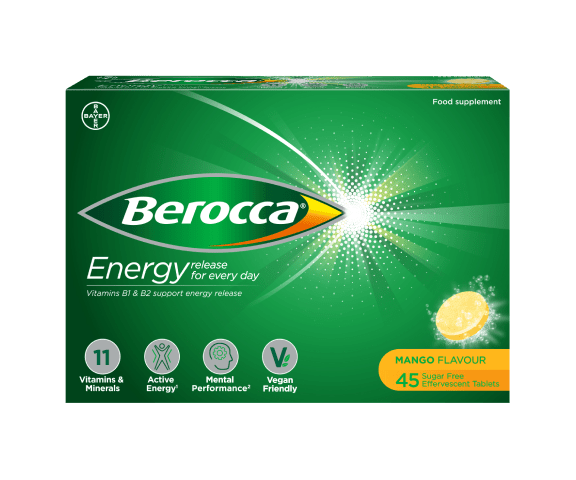
Looking for an extra kick? Berocca® Boost Effervescent Tablets are another option. Packed with 11 vitamins and minerals – including vitamin C, B1, B2, B3, B5, B6, B7, B9 and B12, plus zinc and magnesium – Berocca® Boost also contains caffeine,*** which helps to increase alertness.
Want more tips on how other vitamins and minerals can support your health? Explore our energy blog for easy-to-read guides and practical insights.
*Vitamin B6 contributes to normal energy-yielding metabolism
**Vitamin B6 contributes to normal functioning of the nervous system
***Berocca Boost contains caffeine which helps increase alertness. Do not exceed 400mg of caffeine per day. Not suitable for those pregnant or breastfeeding.
Find the right
Berocca® for You
Shop for Berocca now!

Berocca® Boost Effervescent Tablets
With caffeine for a little kick when you need it most*

Berocca® Blackcurrant Effervescent Tablets
Drop in a glass of water. Wait to fizz. Enjoy!
Find
The nearest shop
Get your Berocca from a store nearby.

*Berocca Boost contains caffeine which helps improve alertness and concentration. Do not exceed 400mg of caffeine per day. Not suitable for those pregnant or breastfeeding.